From the moment you book, here’s exactly what happens.
You are on this page for a reason! You take the first step, and the rest of the pathway will be made easy for you.
The journey, step by step
Five steps. One of them repeats — and the last one is an ending, on purpose.
1
Free 15-minute call
You fill the intake form. Prachi reads it and tells you, honestly, whether Stapoo is the right place.
24–48 hrs
2
First session
100 minutes. You wait outside. Follow-up length is set by what your child needs.
100 min
3
Settling in
Small changes start to show. The first parent debrief is scheduled.
Sessions 2–4
4
The weekly rhythm
Sessions weekly, a parent debrief every 4–6 weeks, tools to try at home.
repeatsWeekly
5
Closing the cycle
A final session for your child to see their own journey, and a handover session for you.
A clear ending
Step 1 — Free 15-minute introductory call
You fill the intake form. It takes about five minutes. Prachi reads it within 24–48 hours.
The call itself is short on purpose. You tell her what’s happening at home. She tells you, honestly, whether Stapoo is the right place. No pitch. No upsell.
Step 2 — First session
The future you have been thinking of can become your child’s present. It starts with one step towards your child’s mental health. Book your session today.
The first session is usually 100 minutes long. The duration of the follow-up sessions is decided by Prachi, based on your child’s or teenager’s requirement.
You, the parent, will:
Wait in the waiting room (offline) or step out (online).
Be on time for your session — late minutes don’t get added to the session.
Resist the urge to ask “what did you talk about” on the way home. Your queries about the session will be addressed by Prachi in your Parenting session.
Step 3 — Settling in (sessions 2–4)
Small noticeable changes will show you that healing has started. More smiles on your child’s face, becoming playful, flexible behaviour, an increase in appetite, and even increased anger & more sleep can be a sign of healing. So don’t worry. Discuss your worries in your Parenting sessions with Prachi.
Around session three or four, Prachi will schedule the first parent debrief — a session just for you (and your co-parent, if you have one). She’ll share what she’s noticing, what’s underneath the behaviour, and one thing to try at home for a week.
Step 4 — The weekly rhythm
Sessions are weekly. Prachi will decide the frequency of the sessions according to your child’s requirement.
Through the cycle, you can expect:
A parent debrief every 4–6 weeks
Tools or “homework” to try at home, based on what the child is working on
An honest mid-cycle conversation about what’s working
A clear ending — therapy isn’t supposed to be forever
Step 5 — Closing the cycle
Closing involves: a final session for the child to appreciate their journey of healing & transformation, and a parent session for handover. You can stay in touch.
Online vs. in-person — what to choose
In person
At the practice in Noida
Held at Prachi’s practice space in Noida
Parents wait in the waiting area
Preferred for younger children, who do better with toys, books and a real physical space
Online
Equally impactful
For children, teens & parent coaching. To make them work you’ll need:
A laptop or tablet (a phone is not ideal)
Stable internet
A separate, quiet room where your child can speak freely
Respect for their confidentiality — don’t sit just outside the door
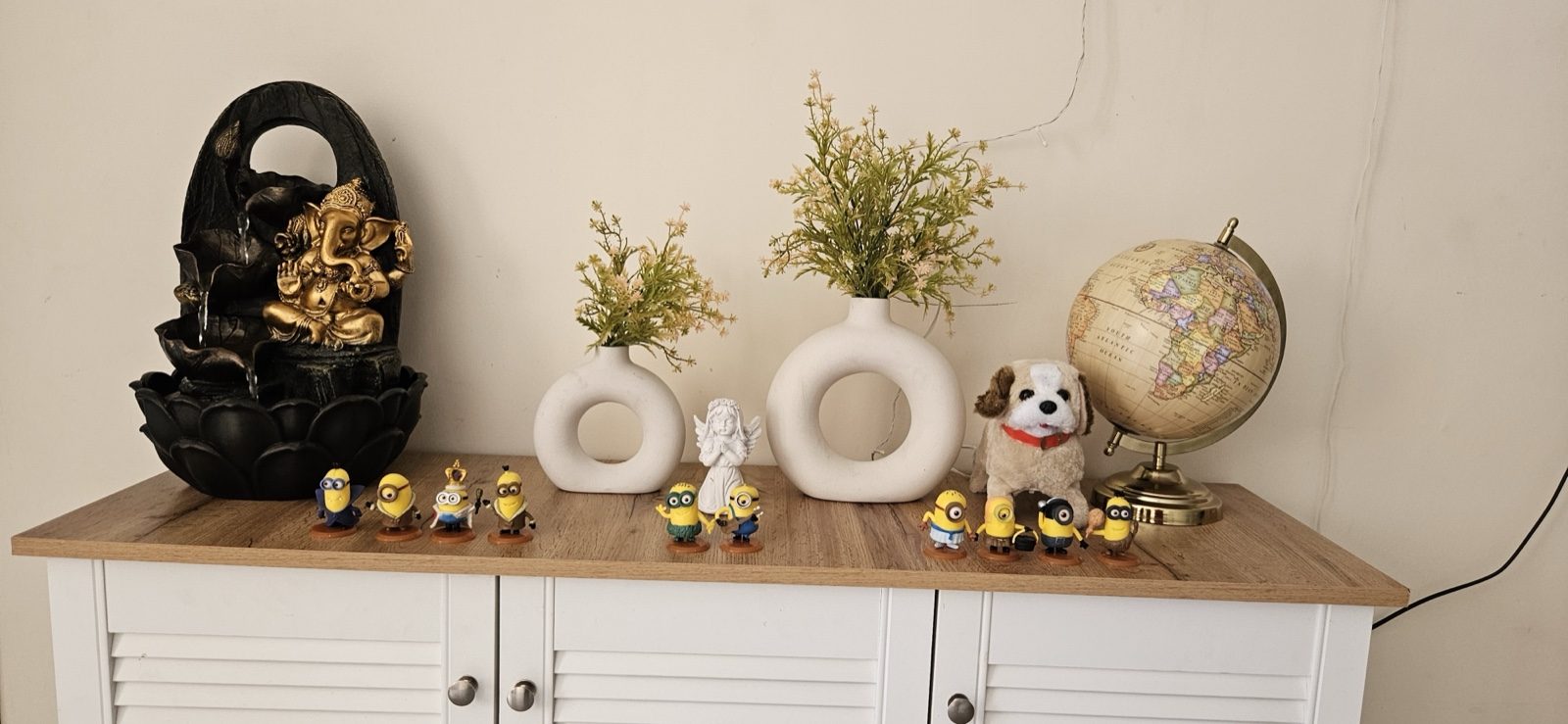
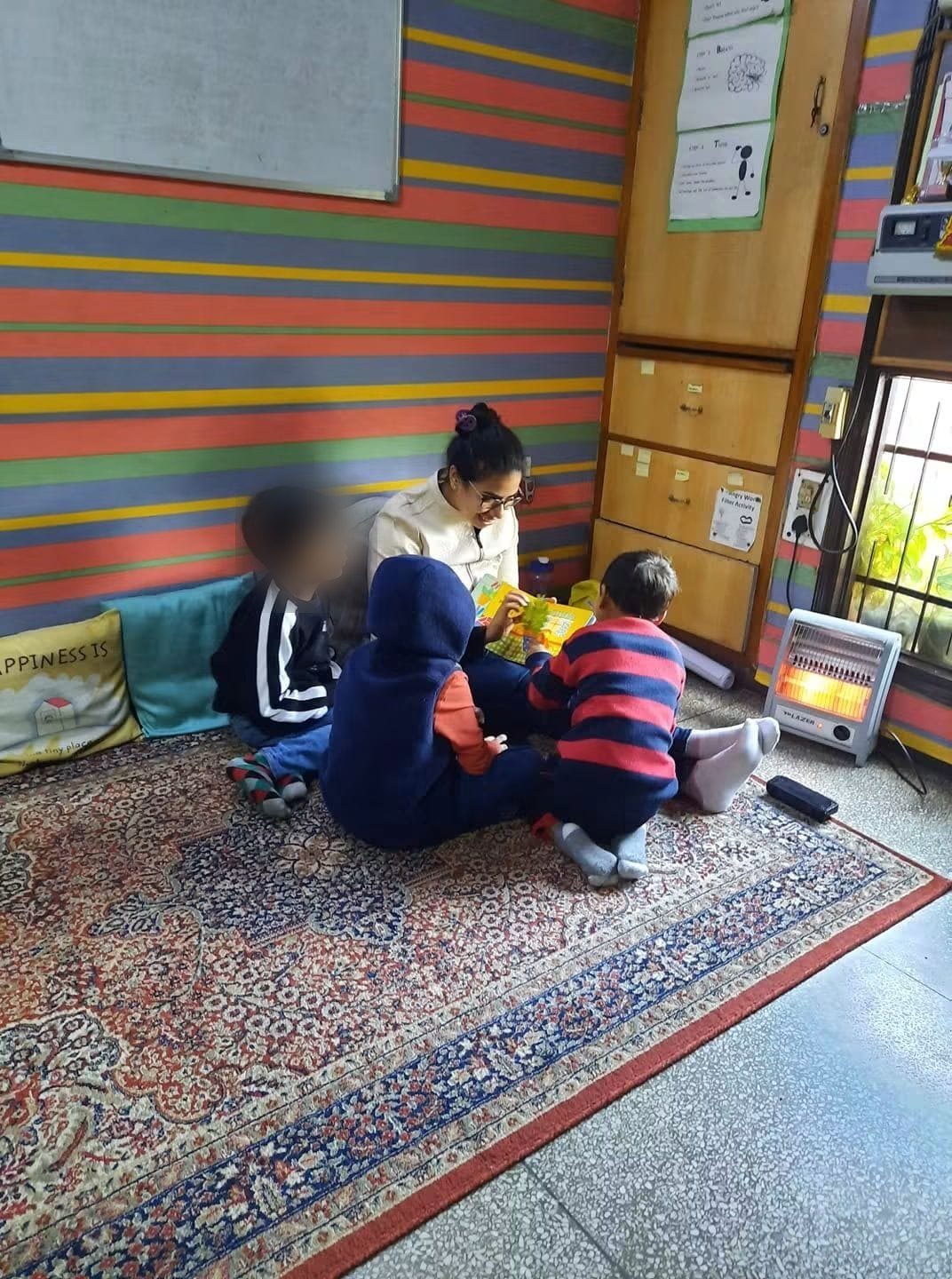
Here are some pictures of the therapy room.
A corner of the therapy room in Noida.A group session in progress — one child’s face softly blurred for privacy.
Working agreements
These are non-negotiable. Most parents appreciate the clarity — therapy without boundaries doesn’t work.
Sessions are 50 minutes.
They start on time and end on time. Prachi needs the buffer to prepare for the next session.
Late starts don’t extend the session.
If you arrive 15 minutes late, the session still ends at the original time.
Discussions happen in session, not on chat.
If you need to talk to Prachi about your child, book a parent session. Phone calls and WhatsApp suggestions aren’t part of the practice.
WhatsApp is for logistics only.
Use it to fix timings, send happy news or photos, share homework, cancel or reschedule, or note an observation. Prachi reads everything but won’t reply with advice — she’ll bring it into your next session instead.
Fees are paid in advance for the cycle of sessions.
Without payment, sessions aren’t booked.
Same-day cancellations are charged 100%.
This is how Prachi protects everyone’s time, including yours when you need a slot.
No-shows close after 20 minutes.
If you or your child don’t appear within 20 minutes of the start time, the slot closes.
Reminders are not sent.
Set your own. This is part of taking 100% responsibility for the work.
Sundays are off.
One day a week, Prachi is unavailable — usually Sunday.
The first parent debrief is after the third or fourth child session.
Not earlier — your child needs the space first.
Why all the rules? Therapy is a relationship between three adults — you, your co-parent or family, and Prachi — built around your child. Clear agreements protect that relationship. Vague ones erode it.
What therapy will ask of you
Therapy works when both sides do the work. Specifically:
Take 100% responsibility for the change.
Therapy isn’t something done to you or to your child. It’s collaborative.
Carry a therapy journal.
A simple notebook where you record observations, breakthroughs, setbacks, and tools you’re trying. Bring it to parent sessions.
Be on time. Respect the duration.
Hold on to your queries.
They will be addressed in the Parents’ session. You will not receive feedback after every session.
Trust the pace.
Three takeaways
The work is structured on purpose. Structure is what makes the room safe enough for change.
Parents are equal partners in the process — not bystanders, not “the problem,” just essential.
You’re now ready to start therapy. Book your slot today.
Ready when you are.
If the way Stapoo works sounds right for your family, the next step is the free 15-minute call.